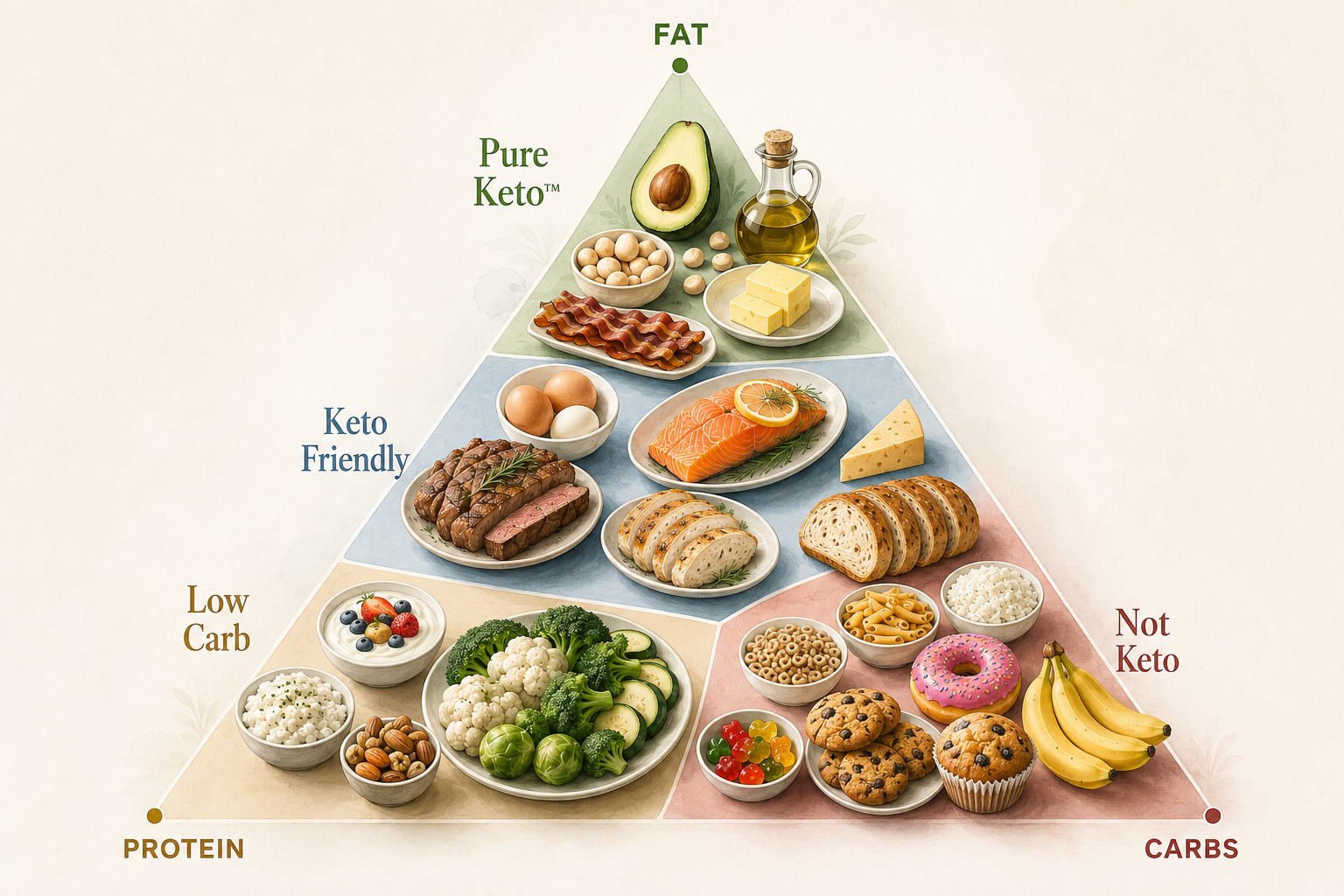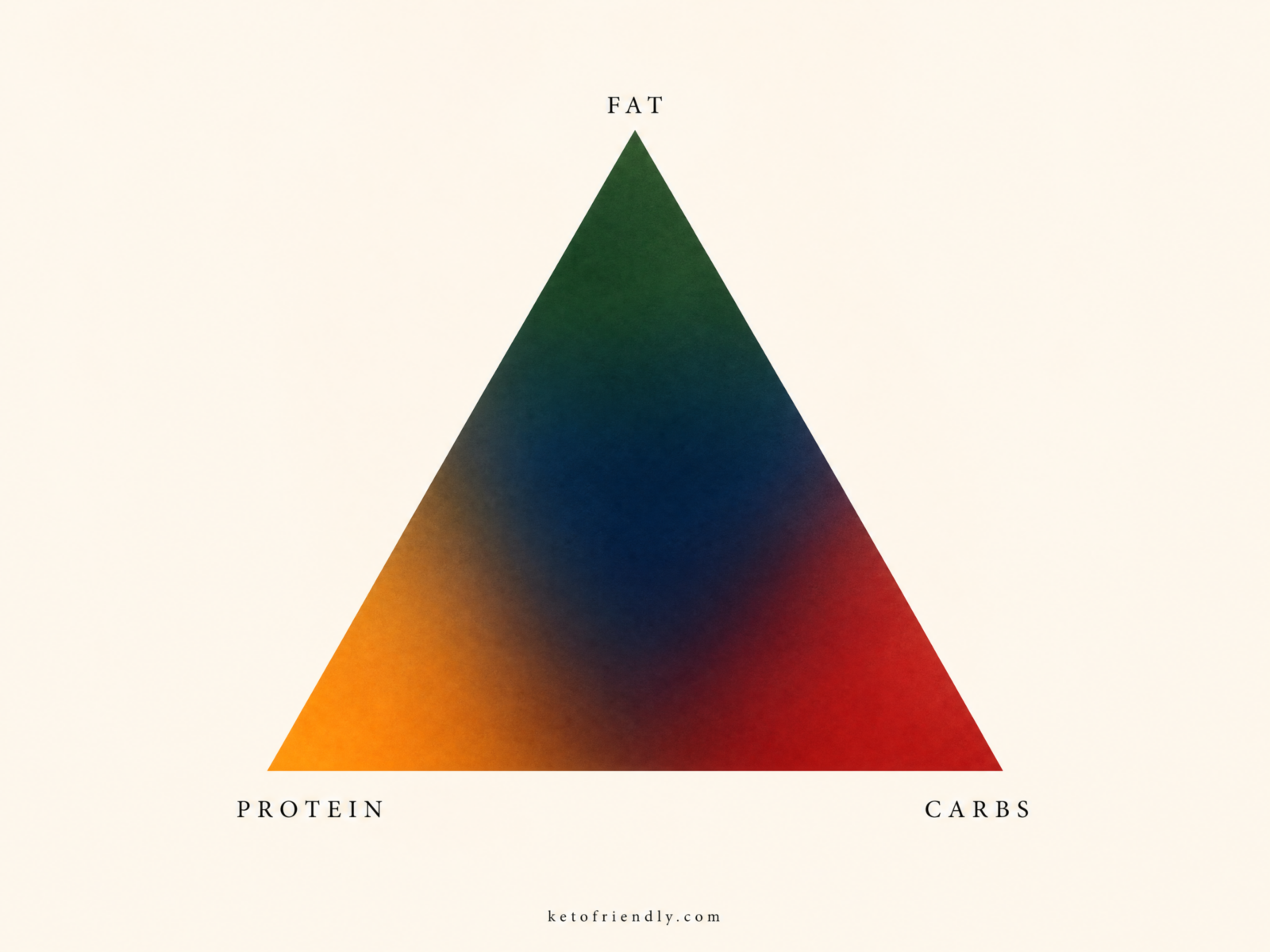


The complete Pure Keto classification of every fiber ingredient used in the food industry, ranked by actual impact on ketosis. Built on peer-reviewed human absorption data, not nutrition label math, not glycemic index, not manufacturer claims
The Core Principle
The FDA recognizes over 20 isolated or synthetic fiber ingredients as qualifying for the dietary fiber line on nutrition panels. That classification was designed to identify fibers with beneficial physiological effects on human health. It was not designed to certify that those ingredients are safe for ketogenic diets. These are different standards.
A fiber can legitimately qualify as dietary fiber under FDA rules and still meaningfully contribute to your glucose load. Isomalto-oligosaccharides (IMO) is the most documented example: FDA-approved dietary fiber, with peer-reviewed evidence of blood glucose spikes comparable to dextrose in fasted human subjects.
The Pure Keto Fiber Registry applies one question to every ingredient: based on actual human absorption data, how much of this fiber enters the bloodstream as glucose? The answer determines the deduction tier. Nothing else does. The glycemic index is not the relevant metric; ketosis is determined by the total glucose load, not the rate at which it arrives. A low-GI food can still contain enough total carbohydrate to end ketosis entirely.[1]
Fiber Classification Under the Pure Keto Standard
We have now applied the core principle above to every fiber ingredient recognized by the FDA as dietary fiber. Each ingredient was evaluated using peer-reviewed human absorption data to determine how much of it actually enters the bloodstream as glucose under normal eating conditions. The results fall into three clear tiers.
Tier 1: Fibers You Can Fully Deduct
These fibers are confirmed non-digestible in peer-reviewed human studies. They are either fermented by gut bacteria into short-chain fatty acids, which are metabolized as fat rather than carbohydrates, or absorbed and excreted unchanged. No meaningful glucose enters the bloodstream from any Tier 1 ingredient.**[**4] [5]
| Ingredient | Also Labled | FDA Status | Rationale |
|---|---|---|---|
| Natural/intrinsic plant fiber | Cellulose, plant cell wall fiber, bran | Intrinsic & intact | Passes through undigested; fermented to SCFAs in colon |
| Inulin & inulin-type fructans | Chicory root fiber, FOS, oligofructose | FDA 2018 | GI of 0; fully fermented; zero glucose absorption confirmed across multiple RCTs [4] |
| Pectin | Apple pectin, citrus pectin, sugar beet pectin | FDA 2016 | Fermented in colon; randomized trials show no impact on fasting or postprandial blood glucose |
| Polydextrose | PDX | FDA 2018 | Poorly digested by human enzymes; 12-week trials show no blood glucose impact even in diabetic subjects [6] |
| Acacia fiber | Gum arabic, acacia gum | Intrinsic | Fermented slowly in colon; clinical trials show improved fasting glucose turnover |
| Beta-glucan | Oat beta-glucan, barley beta-glucan | FDA 2016 | Viscous fiber; slows gastric emptying but not absorbed as glucose; fermented to SCFAs |
| Psyllium husk | Psyllium, ispaghula husk | FDA 2016 | Passes through undigested; widely studied with no blood glucose contribution |
| Guar gum | — | FDA 2016 | Viscous soluble fiber; not absorbed; colonic fermentation only |
| Locust bean gum | Carob bean gum, LBG | FDA 2016 | Galactomannan fiber; not digested in small intestine |
| Arabinoxylan | Wheat bran fiber | FDA 2018 | Fermentable; FDA approved specifically for attenuating blood glucose |
| Alginate | Sodium alginate, alginic acid | FDA 2018 | Seaweed-derived; gel-forming; not absorbed as glucose |
| Galactooligosaccharides | GOS, trans-GOS | FDA 2018 | Prebiotic; fermented in colon; no meaningful glucose absorption |
| Glucomannan | Konjac fiber, konjac glucomannan | FDA 2020 | Highly viscous; passes through undigested; one of the most studied zero-glucose fibers |
| Hydroxypropylmethylcellulose | HPMC | FDA 2016 | Synthetic cellulose derivative; not absorbed or metabolized |
| Mixed plant cell wall fibers | Apple fiber, bamboo fiber, pea hull fiber, citrus fiber, oat hull fiber, sugar beet fiber, soy fiber, rice bran fiber, wheat fiber | FDA 2018 | Prebiotic; fermented in the colon; no meaningful glucose absorption |
Tier 2: Partially Deductible Fibers
These fibers are partially digestible or have inconsistent absorption data in human studies. Some portion may be absorbed as glucose depending on dose, food matrix, and individual metabolism. The 50% deduction is a conservative, evidence-based middle position. Tier 2 is also the default classification for any fiber ingredient not listed in this registry, pending review.
| Ingredient | Also labeled as | FDA status | Rationale |
|---|---|---|---|
| Soluble corn fiber | SCF, corn dextrin | Enforcement discretion | Poorly but non-trivially digested; absorption inconsistent; labeling practices vary widely |
| Soluble tapioca fiber | Tapioca dextrin, cassava fiber | Varies | Often IMO in disguise — verify. When confirmed not IMO, it is partially digestible. If the label also lists IMO or VitaFiber, treat as Tier 3. |
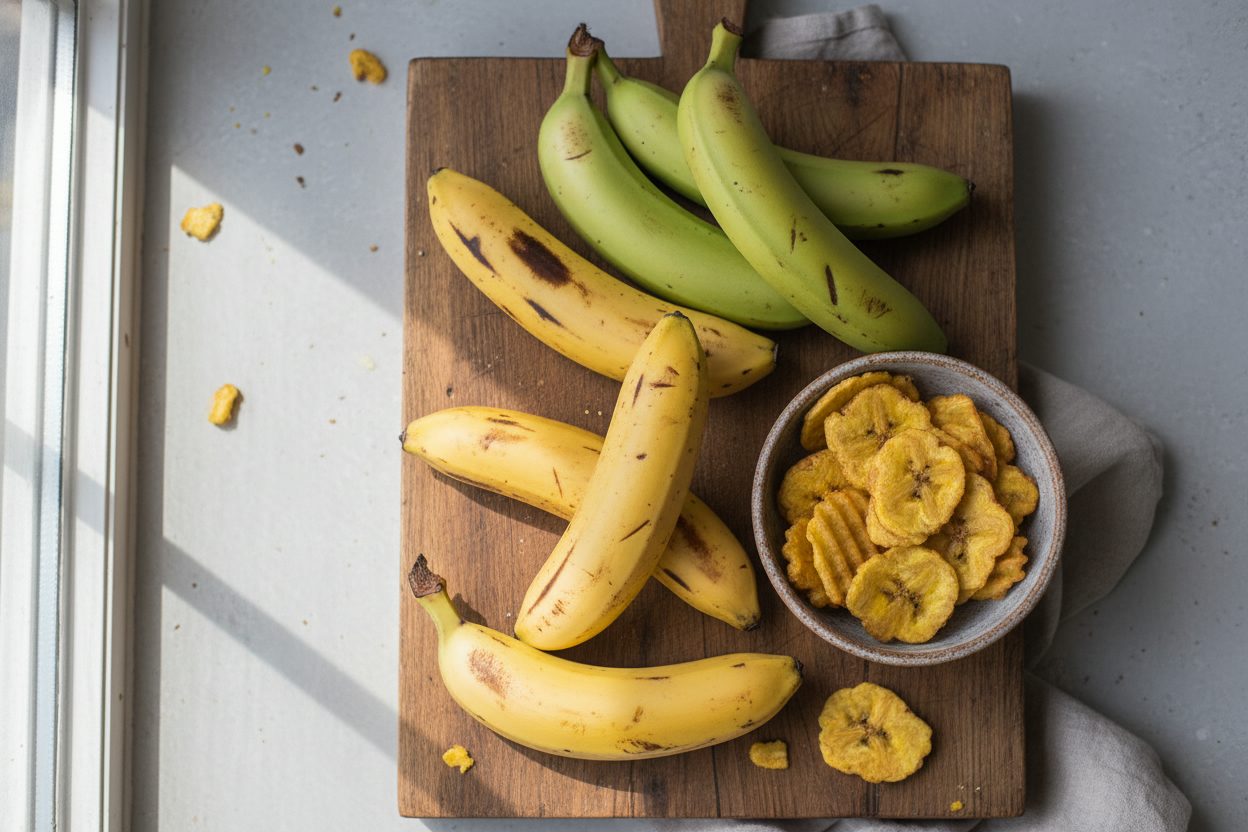
| High amylose starch (RS2) | Hi-maize, green banana flour | FDA 2018 | Partially fermented and partially absorbed; cooking can convert resistant to digestible starch |
| Cross-linked phosphorylated RS4 | RS4 resistant starch, modified starch | FDA 2019 | More heat-stable than RS2; still shows partial fermentability; limited long-term human data |
| Resistant maltodextrin / dextrin | Fibersol-2, soluble resistant dextrin | FDA 2018 | Derived from starch; partially digestible fraction varies by product and processing; not fully inert |
Tier 3: Non-Deductible Fibers
These ingredients are labeled as dietary fiber on nutrition panels. Under the Pure Keto Standard, they receive zero deduction because peer-reviewed human studies confirm meaningful glucose absorption. Every gram declared on the label counts as a full carbohydrate toward your Pure Keto Net Carb total.
| Ingredient | Also Labeled | Evidence | Rationale |
|---|---|---|---|
| Isomalto-oligosaccharides | IMO, VitaFiber, IMO syrup, isomaltooligosaccharides | Multiple peer-reviewed RCTs in human subjects[2][3] | Blood glucose spikes of ~50 mg/dL and fivefold insulin increases within 30 minutes in fasted human subjects. Insulin response comparable to dextrose. Behaves as a digestible carbohydrate despite FDA fiber classification. |
Sugar Alcohol Deductions
Sugar alcohols are classified separately from fiber under the Pure Keto Net Carb Standard. Each is evaluated on actual small intestine absorption and downstream glucose metabolism. Listed from most to least keto-safe.
| Sugar Alcohol | Deduction % | Absorption | Metabolic Effect | Label Guidance |
|---|---|---|---|---|
| Erythritol | 100% | ~90% absorbed in small intestine | Excreted unchanged in urine, not metabolized. Zero caloric or glucose contribution.[7] | Safe to fully deduct |
| Mannitol | 100% | Low small intestine absorption | Absorbed portion excreted unchanged; remainder fermented. No glucose metabolism. | Safe to fully deduct |
| Allulose | 100% | Absorbed but not metabolized | FDA excludes from total and added sugars. No glucose contribution confirmed.[8] | FDA may already exclude from label — verify per product |
| Sorbitol | 75% | 2-30% alone; higher with fat or glucose | Partially converted to fructose in liver; remainder fermented. Real-meal absorption is higher than fasted studies suggest. | Generally low impact but non-zero in keto meal context |
| Xylitol | 50% | 49-95% absorbed (wide range across studies) | Metabolized in liver via non-glucose pathway. Small but real blood glucose rise. [7] | Common in gum, mints, dental products |
| Maltitol | 50% | ~40-60% absorbed in small intestine | Metabolized as glucose. The absorbed fraction directly raises blood glucose. [9] [10] | Most keto labels subtract 100% — this is incorrect. Count 50% of declared maltitol as net carbs. |
The Default Rule
The food industry regularly introduces novel fiber ingredients. When an ingredient does not appear in this registry, the KF Standard applies the following rule:
Any fiber ingredient not listed in the KF Fiber Registry is assigned Tier 2 (50% deduction) pending review. Manufacturers seeking Pure Keto certification that use unlisted fiber ingredients must submit peer-reviewed human absorption data for KF review before certification can be granted.
To submit an ingredient for registry review: standard@ketofriendly.com
Registry Methodology
Classifications in this registry are determined by the following five-step process:
1. Start with the FDA framework. The FDA’s 2016 Nutrition Facts label rule and subsequent 2018-2020 guidance documents define the universe of ingredients that can legally be declared as dietary fiber. This gives us a finite, authoritative starting list.[11]
2. Apply the ketosis question, not the GI question. For each ingredient: how much is absorbed as glucose in the small intestine under normal eating conditions? Glycemic index is not the relevant metric. Total glucose contribution to the bloodstream is.[1]
3. Require peer-reviewed human data. Animal studies and in-vitro assays are noted, but do not determine tier placement. Human randomized controlled trials, ideally with a crossover design in healthy adults, are the primary evidence source. Where data is limited, Tier 2 is applied as a conservative default.
4. Account for food matrix effects. Absorption rates change meaningfully when fibers and sugar alcohols are consumed with fat, protein, or other carbohydrates — as they are in virtually all real food contexts. Where food matrix effects are significant, they are noted in the tier rationale.
5. Review and update annually. This registry is a living document. New research, new ingredients, and updated FDA guidance are reviewed each year. Version date is noted below. Brands certified against a prior version are notified of any material changes.
Citations & Sources
All tier classifications are based on peer-reviewed human studies. Primary sources are listed below by section.
[1] Ketosis and Glycemic Index: Core Principle
Westman EC, et al. “The effect of a low-carbohydrate, ketogenic diet versus a low-glycemic index diet on glycemic control in type 2 diabetes mellitus.” Nutrition & Metabolism. 2008; PMC2633336. https://pmc.ncbi.nlm.nih.gov/articles/PMC2633336/
[2][3] IMO: Tier 3 Classification
Dahl WJ, et al. “Gastrointestinal Tolerance and Glycemic Response of Isomaltooligosaccharides in Healthy Adults.” Nutrients. 2018; PMC5872719. https://pmc.ncbi.nlm.nih.gov/articles/PMC5872719/
Kendall CWC, et al. “Ingestion of isomalto-oligosaccharides stimulates insulin and incretin hormone secretion in healthy adults.” Journal of Functional Foods. 2019. https://www.sciencedirect.com/science/article/pii/S1756464619306541
[4] Inulin / Inulin-Type Fructans: Tier 1 Classification
Bonsu NK, et al. “Can dietary fructans lower serum glucose?” Journal of Diabetes. 2011; PubMed PMID: 21040500. https://pubmed.ncbi.nlm.nih.gov/21040500/ — Systematic review of 13 RCTs confirming inulin-type fructans are not digested in the small intestine and do not release glucose into the bloodstream.
Rao M, et al. “Inulin-type fructans supplementation improves glycemic control for the prediabetes and type 2 diabetes populations.” Journal of Translational Medicine. 2019; PMC6896694. https://pmc.ncbi.nlm.nih.gov/articles/PMC6896694/ — Meta-analysis of 33 RCTs confirming inulin-type fructans are not metabolized as glucose in healthy adults.
[5] [11] General Fiber Classification: FDA Framework
U.S. Food & Drug Administration. “Questions and Answers on Dietary Fiber.” May 2016; updated 2018-2020. https://www.fda.gov/food/food-labeling-nutrition/questions-and-answers-dietary-fiber
Dahl WJ, et al. “FDA Approval of Added Fiber as Dietary Fiber.” PMC7257709. https://pmc.ncbi.nlm.nih.gov/articles/PMC7257709/
[6] Polydextrose: Tier 1 Classification
Schwab U, et al. “Impact of sugar beet pectin and polydextrose on fasting and postprandial glycemia.” European Journal of Clinical Nutrition. 2006; PubMed PMID: 16523204. https://pubmed.ncbi.nlm.nih.gov/16523204/
Chen HL, et al. “Studies on the effects of polydextrose intake on physiologic functions in Chinese people.” American Journal of Clinical Nutrition. 2000; PubMed PMID: 11101478. https://pubmed.ncbi.nlm.nih.gov/11101478/
[7] Erythritol and Xylitol
Bornet FRJ, et al. “Plasma and urine kinetics of erythritol after oral ingestion by healthy humans.” PubMed PMID: 8933644. https://pubmed.ncbi.nlm.nih.gov/8933644/
Flint N, et al. “Absorption and Metabolism of the Natural Sweeteners Erythritol and Xylitol in Humans: A Dose-Ranging Study.” International Journal of Molecular Sciences. 2022; PMC9456049. https://pmc.ncbi.nlm.nih.gov/articles/PMC9456049/
[8] Allulose: FDA Guidance
U.S. Food & Drug Administration. “The Declaration of Allulose and Calories from Allulose on Nutrition and Supplement Facts Labels.” Final Guidance. Federal Register, October 19, 2020; Docket No. FDA-2019-D-0725. https://www.federalregister.gov/documents/2020/10/19/2020-22901/the-declaration-of-allulose-and-calories-from-allulose-on-nutrition-and-supplement-facts-labels
[9] [10] Maltitol: 50% Deduction
Grimble GK, et al. “Comparative study of maltitol and sucrose by means of continuous indirect calorimetry.” PubMed PMID: 3298708. https://pubmed.ncbi.nlm.nih.gov/3298708/
Natah SS, et al. “Metabolic fate of ingested [14C]-maltitol in man.” PubMed PMID: 1802977. https://pubmed.ncbi.nlm.nih.gov/1802977/